
What Does Blood Pressure at Age 80 Mean?
Blood pressure at age 80 has no single target that fits everyone. NICE recommends a clinic reading below 150/90 mmHg for adults aged 80 and over with hypertension, while home readings have a separate target below 145/85. Frailty, other health conditions, dizziness, falls, standing readings, and measurement technique all affect how a clinician interprets those numbers.
What is a normal blood pressure for an 80-year-old?
There is no one “normal” number that also serves as every 80-year-old’s treatment goal. The National Institute on Aging says normal blood pressure for most adults is below 120/80 mmHg, and classifies high blood pressure as systolic pressure of 130 mmHg or higher, or diastolic pressure of 80 mmHg or higher. These categories describe readings; they do not set an individual treatment target at age 80.
For adults aged 80 and over who have hypertension, NICE recommends a clinic blood pressure below 150/90 mmHg. For home or ambulatory monitoring, its target is below 145/85 mmHg. These figures are targets from a specific guideline, not a universal definition of healthy blood pressure for every older adult.
The difference matters. A category used to identify high blood pressure and a target used to guide treatment answer different questions. NICE also says clinicians should use judgment for people aged 80 and over who have frailty or multiple health conditions. The National Institute on Aging likewise says that treatment decisions for older adults should account for other health conditions and overall fitness, with the clinician and patient finding a suitable target.
Age-related artery stiffening commonly raises systolic pressure while diastolic pressure stays below 80, a pattern the National Institute on Aging calls isolated systolic hypertension. A reading with a high top number and a lower bottom number still deserves clinical interpretation; the two figures should be read together, not treated as interchangeable.
Is 150/90 too high for someone who is 80?
A clinic reading of 150/90 mmHg is at, not below, the NICE target for an adult aged 80 or older who has hypertension. NICE’s recommendation is to reduce clinic blood pressure to below 150/90 mmHg. One reading alone does not establish a diagnosis or show whether a treatment plan is right.
The setting changes the comparison. NICE’s home and ambulatory target is below 145/85 mmHg, so a home reading should not be judged against the clinic threshold as if the two were identical. Keep a record of readings and note whether they were taken at home or in a clinic; that context helps a clinician interpret patterns rather than react to one number.
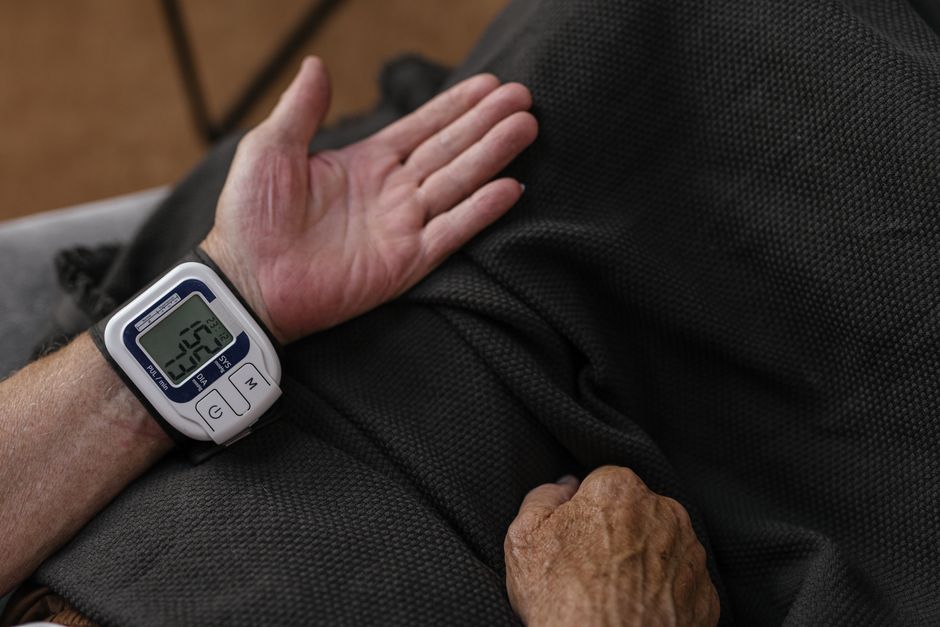
Measurement quality matters, too. The American Heart Association recommends an automatic, validated upper-arm cuff monitor; wrist and finger devices are less reliable. Before measuring, avoid smoking, caffeine, and exercise for 30 minutes, empty the bladder, then sit quietly for at least five minutes.
For each session, sit with the back supported, feet flat, and cuffed arm supported at heart level. Take two readings one minute apart and record both. The American Heart Association says home measurements can help confirm a diagnosis and show whether treatment is working, but they do not replace clinical visits or justify stopping medication without advice from a health professional.
Should an 80-year-old aim for a blood pressure below 130/80?
Not automatically. The National Institute on Aging’s category for high blood pressure begins at 130 systolic or 80 diastolic, but that category does not mean every person aged 80 should be treated to below 130/80. NICE gives a different target for adults aged 80 and over with hypertension: below 150/90 mmHg in clinic, with clinical judgment for frailty or multiple conditions.
Targets can differ between recommendations and individual circumstances. A clinician weighs the measured pressure against overall health, symptoms, and how well the person tolerates treatment. A lower number is not automatically a better goal if the person has a significant postural drop or symptoms when standing.
NICE recommends checking for postural hypotension in people with hypertension who are 80 or older. When a person has dizziness or falls on standing, NICE advises measuring blood pressure lying down or seated, then again after standing for at least one minute. A fall of 20 mmHg systolic or 10 mmHg diastolic warrants evaluation, including consideration of medication causes.
If symptoms or a significant drop are present, NICE says to base the treatment target on standing blood pressure. That shifts the question from “What is the lowest number?” to “What reading is appropriate in the position where symptoms occur?” Reporting the symptom and the conditions in which it happens gives the clinician more useful information than a seated reading alone.
What blood pressure is dangerously high at age 80?
The American Heart Association says a reading higher than 180/120 mmHg should be repeated after at least one minute. If the repeat remains above 180/120 without concerning symptoms, contact a health professional as soon as possible. This threshold signals the need for prompt action; it does not mean one isolated reading by itself tells the whole clinical story.
If a reading above 180/120 comes with chest pain, shortness of breath, back pain, numbness, weakness, vision changes, or difficulty speaking, the American Heart Association says to call 911. Those symptoms make the situation an emergency. Do not wait to see whether the pressure falls on its own.
Low readings also need context. The American Heart Association describes hypotension as below 90/60 mmHg, but says a low reading is usually not harmful unless accompanied by concerning symptoms. Dizziness, confusion, nausea, fainting, fatigue, blurred vision, and palpitations can occur with low blood pressure. Dehydration and some medicines, including diuretics, blood pressure drugs, and certain heart medicines, can contribute.
A single lower-than-usual reading is usually not cause for alarm by itself, according to the American Heart Association. Symptoms or a sudden decline are reasons to contact a health professional. For an older adult, the meaningful pattern includes the number, the position used to measure it, how the person feels, and whether the change is sustained.
Frequently Asked Questions
Can blood pressure be too low for an 80-year-old?
Yes. The American Heart Association describes blood pressure below 90/60 mmHg as low, but a low reading is usually most concerning when it comes with symptoms such as dizziness, confusion, fainting, or blurred vision. A single lower-than-usual reading without symptoms is usually not a cause for alarm by itself.
Do blood pressure targets change if an older adult is frail or gets dizzy when standing?
They can. NICE advises clinical judgment for people aged 80 and over who have frailty or multiple health conditions, and recommends using standing blood pressure to guide treatment when there is a significant postural drop or symptoms. Dizziness or falls should be reported because medicines can contribute.
Should I use home readings or the doctor’s office reading to judge blood pressure at age 80?
Both can be useful, but they have different target thresholds in NICE guidance: below 150/90 mmHg in clinic and below 145/85 mmHg at home or with ambulatory monitoring for adults aged 80 and over with hypertension. The American Heart Association recommends recording two properly taken home readings one minute apart and sharing the record with a clinician.
Sources
- National Institute for Health and Care Excellence (NICE), Hypertension in adults: diagnosis and management
- American Heart Association, Monitoring Your Blood Pressure at Home
- American Heart Association, When to Call 911 for High Blood Pressure
- American Heart Association, Low Blood Pressure
- National Institute on Aging, High Blood Pressure and Older Adults
Disclaimer: This article is for general information only and is not medical advice. It is not a substitute for diagnosis or treatment by a qualified healthcare professional. Always speak to your doctor before acting on anything you read here.

Which Breast Cancer Risk Factors Matter Most?
Compare age, family history, dense breasts, inherited gene changes, and lifestyle factors when assessing breast cancer risk.

What Is the Best Way to Beat Breast Cancer After a New Diagnosis?
A practical guide to evidence-based breast cancer treatment decisions, supportive care, and avoiding natural-cure claims.

How Do I Find Pediatric RN Jobs?
Pediatric RN jobs are open to new graduates and experienced nurses; residency timing, employer requirements, and relevant experience shape the route.

How Can I Work With My Rheumatology Team to Find the Cause of Severe Lupus Fatigue?
A practical guide to reviewing severe lupus fatigue with a rheumatology team before considering medication changes.