
Sustainable Food Packaging: Compare Cost, Fit, and Disposal
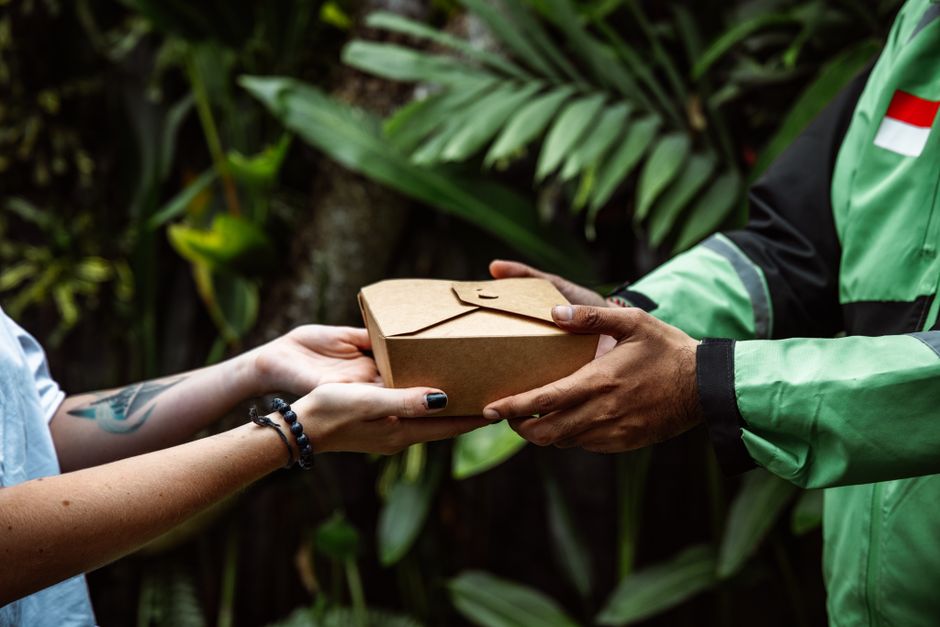
For a small food business, the affordable sustainable package is the one that protects the food, fits local disposal services, and costs less after shipping, storage, and minimum orders are counted. Start with stock products and ask your waste hauler what it accepts. Choose certified compostable packaging only when a local program takes those specific items; otherwise, compare recyclable options and reusable service ware.
Which sustainable packaging is affordable for a small business?
The affordable option is the one with the lowest full cost for your business, not necessarily the lowest price per unit. Add the package price, shipping, storage needs, order minimums, and any collection or hauling cost before comparing materials.
Ask your waste hauler which packaging it accepts before placing an order. The EPA’s food-waste packaging guide says acceptance varies by location, and notes that recycling or composting can cost less than landfilling in many locations. Those savings depend on local service availability. Some haulers offer discounted collection for compostable materials, but the guide does not establish a price for any particular business.
Low-volume buyers can begin with stock packaging and postpone custom branding. The sources do not publish supplier order minimums or prices, so request quotes for the same quantity and delivery location. Ask each supplier to list freight and minimums separately; then compare the total alongside storage space and disposal arrangements.
Reusable service ware belongs in the cost comparison where the business model and washing capacity support it. EPA ranks reusable food service ware first in its federal purchasing guidance. Its source-reduction page reports that a Bay Area program found average annual business savings of $3,000, while an Oakland cafe case study reported $3,768 in yearly savings after source-reduction recommendations. These are program examples, not a guaranteed forecast for another restaurant.
| Option | Who it suits | Cost information | Key limitation |
|---|---|---|---|
| Reusable food service ware | Businesses able to run a reuse and washing system | EPA reports $3,000 average annual savings in one program and $3,768 for an Oakland cafe case study | Specific setup and operating costs are not published in the provided sources |
| Certified commercial compostable ware | Businesses served by a program that accepts the exact product | Product prices and collection charges are not published | Needs local acceptance and collection or hauling |
| Certified recyclable ware | Businesses whose local recycling service accepts the exact material | Product prices are not published | Food residue and small items can make recycling difficult |
| Stock packaging before custom branding | Businesses seeking a lower-commitment purchasing route | Order minimums and prices are not published | Available stock designs and terms depend on the supplier; not published |
Is compostable packaging better than recyclable packaging?
Compostable packaging is better only when the local composting system accepts it and can collect it; recyclable packaging is the better fit when local recycling accepts that material and food residue does not make it unsuitable. Neither label guarantees the package will be processed after use.
The EPA ranks certified commercially compostable ware above certified recyclable ware in its federal purchasing guidance, while placing reusable ware first. That ranking does not replace a local check. EPA says commercial composting facilities are limited in availability and may not accept every product type. Its guidance calls for a local program that accepts the specific items and collection or hauling services.
Recycling has its own limits. The EPA notes that food residue can contaminate food service ware and small items such as utensils are difficult to recycle. A package that is technically recyclable can still be a poor choice if the business’s local service will not take it or the food leaves it too soiled.
“Biodegradable” does not mean “compostable.” The EPA explains that compostable plastic is designed to biodegrade into compost under specified conditions, but not every biodegradable plastic is compostable. Commercially compostable plastics are assessed against criteria that include breaking down at a comparable rate within six months and leaving no toxic residue.
Compostable plastic should not automatically go into plastic recycling. EPA says products labeled compostable generally belong in an industrial or commercial facility, not a home compost pile, unless they are specifically labeled for home composting. When local rules are unclear, ask the waste hauler or local government before buying.
What packaging works for hot, greasy takeaway food?
For hot, greasy takeaway food, choose packaging whose supplier identifies it for the food-contact use and conditions required, then confirm the receiving waste service accepts it. The provided sources do not compare specific package materials by temperature, leak resistance, or grease performance, so those product-level claims must come from supplier specifications.
Grease resistance matters, but the claim needs context. The FDA says PFAS-containing grease-proofing agents were used on paper and paperboard food packaging, including fast-food wrappers and takeout containers, to resist grease, oil, and water. In February 2024, the FDA announced those substances were no longer being sold by manufacturers into the U.S. market for that food-contact use. In January 2025, FDA determined that 35 related food-contact notifications were no longer effective because the uses had been abandoned.
FDA also notes that food-contact authorizations are specific to the manufacturer or supplier. Ask who makes the food-contact material and request current documentation for the exact product. A general statement about a material does not establish the status of every package or supplier.
Then test the disposal route on paper before ordering. Paper-based packaging is not automatically recyclable or compostable after it has held food. EPA identifies food residue as a barrier to recycling food service ware, and its composting guidance requires acceptance of the specific product. Match the barrier needed for the meal with the local end-of-life route.
Frequently Asked Questions
Do customers need access to industrial composting for compostable packaging?
Usually, yes. EPA says products labeled compostable generally belong in an industrial or commercial composting facility unless specifically labeled for home composting. The local program must accept the specific item, and collection or hauling must be available.
How can a small business buy eco-friendly packaging in low quantities?
Start by comparing stock packaging rather than ordering custom-printed items. Request quotes that show minimum quantities, freight, and delivery terms, and check available storage and local disposal options before committing. The provided sources do not publish supplier minimums or low-volume prices.
What certifications should I look for on sustainable packaging?
For commercial compostability, EPA recommends the BPI Commercial Compostability Certification Scheme. BPI says its program uses ASTM D6400 as its base standard, with other assessments applying to eligible products, and provides a searchable catalog to verify certified items. Check the exact product, not only a broad claim on a supplier page.
Sources
- U.S. Environmental Protection Agency: Identifying Sustainable Food Service Ware
- U.S. Environmental Protection Agency: FAQs About Plastic Recycling and Composting
- U.S. Food and Drug Administration: Authorized Uses of PFAS in Food Contact Applications
- U.S. Environmental Protection Agency: Food Service-Related Source Reduction Programs
- Biodegradable Products Institute: Compostability Certification
- U.S. Environmental Protection Agency: Reducing Wasted Food and Packaging Tool

Are There Small-Business Grants or Loans for New Businesses?
Learn where to look for small-business grants, how to check eligibility, and when an SBA microloan may fit startup costs.
Do You Need a License to Operate a Forklift in the USA?
OSHA does not require a universal forklift license. Learn what training, evaluation, site-specific qualification, and records employers must provide.