
What Is a Warehouse Job Like for a First-Time Applicant?
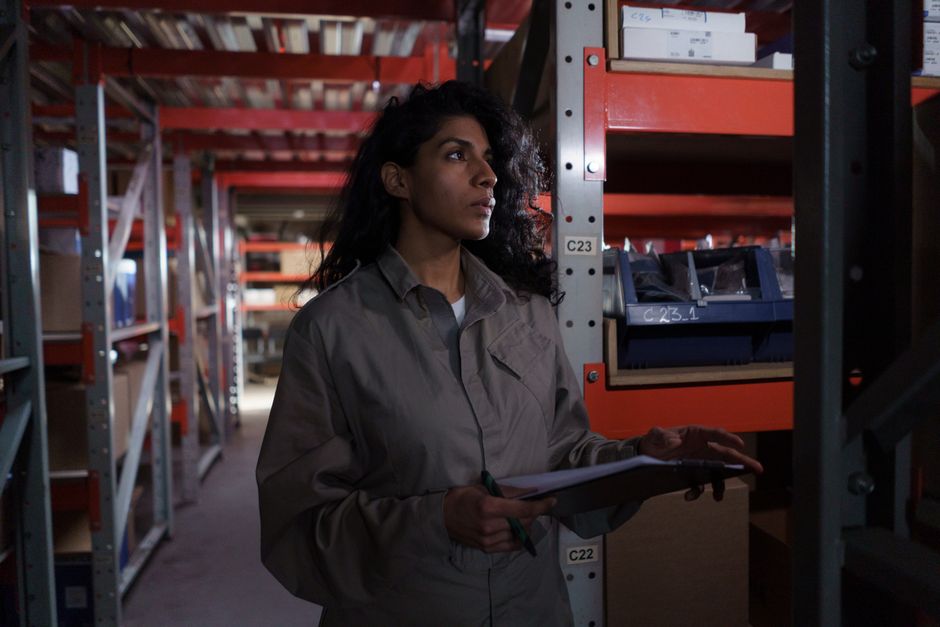
A first warehouse job usually means repetitive physical work, shifting schedules that can include nights or weekends, and measured output such as picks, scans, packs, or loads completed. You can prepare well by confirming the role, training, rate expectations, overtime rules, breaks, footwear, and pay before accepting. There is no single “normal” warehouse experience; the employer’s workflow sets the real stakes.
What is a warehouse job actually like for a beginner?
For a beginner, warehouse work is practical, fast-moving, and more physical than the job ad may make clear. The U.S. Bureau of Labor Statistics says these workers commonly move, sort, pack, wrap, scan, load, and unload goods, while stockers and order fillers retrieve and prepare orders for shipment.
Start by translating the job title into the work itself. A picker retrieves items and scans them. A packer prepares orders for shipment. A dock worker loads or unloads goods. An equipment operator may move materials with powered equipment, but forklift operators must be trained and certified for the vehicle and workplace conditions, according to OSHA.
| Role | What you should clarify before accepting |
|---|---|
| Picker or order filler | Typical item weights, walking distance, tote limit, scan expectations, and how pick time is measured. |
| Packer | Standing time, box sizes, repetitive hand work, packing targets, and training on the station. |
| Dock worker | Load sizes, lifting frequency, pallet work, shift timing, and whether loading or unloading is the core task. |
| Equipment operator | Which equipment is used, whether certification is required, and whether paid training is provided. |
The entry path is accessible, but accessible does not mean effortless. BLS reports that typical entry requirements are no formal credential and short-term on-the-job training, usually a month or less. It also reports 2025 median pay of $18.38 per hour, or $38,220 annually, for hand laborers and material movers. Use that as broad occupation context, not a promise about one offer.
Run the role-reality check. Ask: “What would I physically do most often in a normal shift?” Then follow with: “What are the typical item weights, and how much of the shift is spent walking, standing, bending, or lifting?” Those two questions cut through a vague title quickly.
Footwear is not a minor detail. OSHA’s Grocery Warehousing eTool notes that selectors may stand on hard concrete for an entire shift and recommends supportive, adequately padded shoes that flex at the ball of the foot, with non-skid soles where floors can be slippery. If a health condition contributes to severe fatigue, it is also worth reading how to work with a rheumatology team to find the cause of severe lupus fatigue rather than treating persistent symptoms as something to simply push through.
Are warehouse productivity rates difficult to meet?
Warehouse productivity rates can be difficult when they are set without enough time for safe movement, training, or real-world interruptions; public data does not provide one universal rate that every beginner should meet. The key question is not whether a number exists. It is whether the number leaves room to do the job safely and correctly.
OSHA identifies lifting, lowering, overhead reaching, pushing, pulling, awkward postures, and repetitive tasks as ergonomic risk factors in warehousing. It also warns that a fast pace and continuous performance monitoring can increase stress, fatigue, and musculoskeletal-disorder risk. That turns the rate conversation into a safety conversation, not just a performance conversation.
The evidence has a useful boundary. A NIOSH evaluation of one Nashville grocery warehouse, based on injury logs from 1989 through 1992, found that the site’s order assemblers averaged 4.9 lifts per minute, or 294 lifts per hour, and the report concluded that the performance standards contributed to excessive exertion at that specific workplace. That is not a universal warehouse benchmark. It is a clear reason to ask how an employer designed its benchmark.
Use the safety-margin question. Say: “How is the rate calculated, and does it account for walking around pallets, locating missing items, equipment delays, and safe lifting?” OSHA specifically says pick-time limits should not pressure workers into shortcuts, such as reaching across a pallet instead of walking around it for better access.
Also ask how the rate changes during training. A useful weak question is, “Is there a quota?” A stronger version is, “What is expected in week one, when is performance formally reviewed, and what coaching is available if I am below the target?” The stronger question gets you a process instead of a label.
Do warehouse workers have mandatory overtime during peak season?
Some warehouse workers have mandatory overtime during peak periods, but it is an employer-specific policy that you must ask about before accepting an offer. BLS says schedules for this occupation may include nights and weekends; it does not establish one overtime rule for all warehouses.
Do not settle for “overtime happens sometimes.” Get the operating details: “Is overtime mandatory? How many additional hours are typical during peak season? How much notice do workers get? What are the break and rest policies when shifts run longer?” Those are ordinary hiring questions, not a negotiation stunt.
The reason to ask is concrete. A peer-reviewed U.S. analysis of 110,236 job records found that jobs with overtime schedules had a 61% higher occupational injury or illness hazard rate than jobs without overtime schedules after adjustment for several factors. The same study reported a 37% higher injury hazard rate for working at least 12 hours per day and a 23% higher rate for working at least 60 hours per week. Those findings do not prove that every long shift causes an injury. They do make the schedule part of your safety due diligence.
Build a simple pre-acceptance checklist. Confirm the hourly pay and pay schedule. Confirm the scheduled shift, nights or weekends, and attendance policy. Confirm whether training is paid. Confirm the metric, the ramp-up period, breaks, and mandatory-overtime policy. Finally, ask who you contact when a task, load, or equipment condition feels unsafe.
Your next move: write these five questions down before your interview or offer call, then ask them exactly as written. If the answers stay vague, ask for a concrete example of a normal week and a peak week. You are not trying to win an argument. You are reducing surprises before day one.
Frequently Asked Questions
What should I wear for my first warehouse shift?
Wear footwear with solid support, flexibility at the ball of the foot, adequate padding, and non-skid soles when floors may be slippery. OSHA also recommends padded inserts that support the foot and cushion the impact of walking on hard floors. Confirm any site-specific clothing or protective-equipment requirements with the employer before the shift.
How physically demanding is picking and packing work?
Picking and packing can involve repetitive lifting, carrying, scanning, bending, kneeling, crouching, and standing through a shift. OSHA notes that case-picking loads can range from a few pounds to more than 100 pounds, so the real demand depends on the products, tote limits, layout, and pace at that facility. Ask to see the typical items and work area rather than relying on the job title.
What questions should I ask at a warehouse job interview?
Ask what metric is tracked, what a new hire is expected to achieve during training, whether overtime is mandatory, how long peak shifts run, and how breaks work. Also ask whether equipment training is paid and whether a role requires forklift certification. The goal is not to sound difficult; it is to make the work, schedule, and safety expectations visible before you accept.
Sources
- U.S. Bureau of Labor Statistics, Occupational Outlook Handbook: Hand Laborers and Material Movers
- Occupational Safety and Health Administration: Warehousing Hazards and Solutions
- Occupational Safety and Health Administration: Grocery Warehousing eTool
- National Institute for Occupational Safety and Health: Health Hazard Evaluation, Kroger Grocery Warehouse
- Occupational and Environmental Medicine: Overtime and Occupational Injury or Illness Risk

What Do Delivery and Rideshare Drivers Really Make After Expenses?
Calculate delivery or rideshare net pay after mileage, taxes, insurance, downtime, repairs, and depreciation before committing your car.

How Can Students Earn Legitimate Income Online With Freelance Skills?
A practical guide to student freelance microservices, first clients, platform fees, payment protection, and scam warning signs.